A final course grade is a weighted average when the final exam is assigned a fixed part of the course. Convert every percentage weight to a decimal before multiplying.
The formula
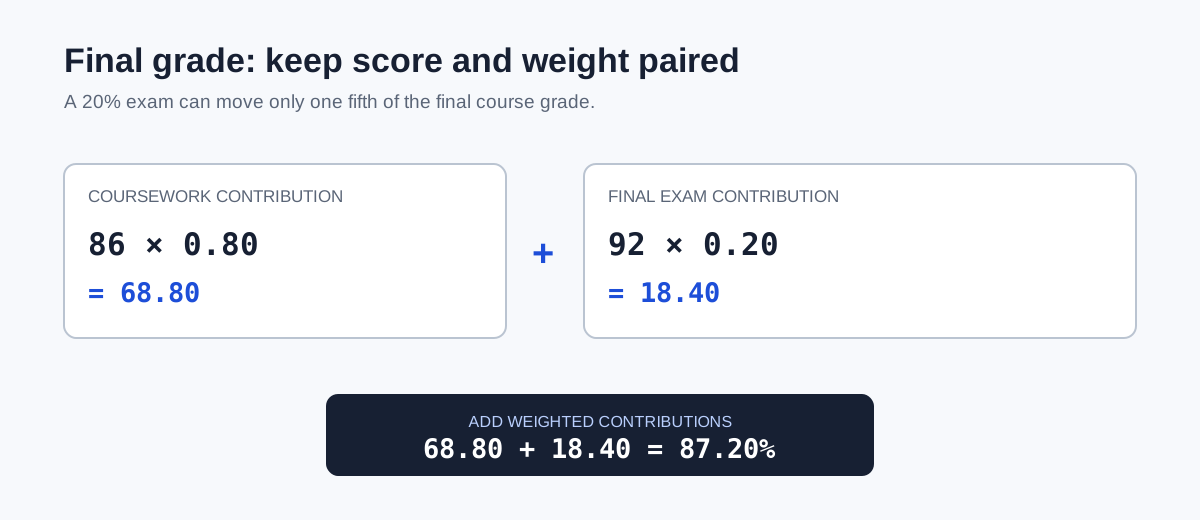
Worked example
The coursework average is 86. The final exam is worth 20 percent, so earlier coursework represents 80 percent.
| Component | Score | Weight | Contribution |
|---|---|---|---|
| Coursework | 86 | 0.80 | 68.80 |
| Final exam | 92 | 0.20 | 18.40 |
| Total | 1.00 | 87.20 |
Calculate a final grade step by step
- Write the final exam weight as a decimal. A 20 percent final becomes 0.20.
- Subtract the exam weight from 1.00 to find the share already completed.
- Multiply the current coursework average by the completed share.
- Multiply the final exam score by the exam weight.
- Add the two contributions and round only the displayed result.
This sequence prevents the most common mistake: adding the exam score to the current average and dividing by two. That shortcut gives both numbers equal influence even when the final is worth far less than half of the course.
Measure how much the final can move the course grade
The exam weight is also the grade's sensitivity to the exam. When the final is worth 20 percent, every five-point change on the exam moves the course grade by one point. A score of 80 instead of 90 changes the final course estimate by only two points.
| Exam score | Exam contribution | Course estimate |
|---|---|---|
| 80 | 16.00 | 84.80 |
| 90 | 18.00 | 86.80 |
| 100 | 20.00 | 88.80 |
These scenarios use the same 86 coursework average and 20 percent final weight. Use the semester grade calculator to compare several exam outcomes without changing the completed contribution.
What does “current average” mean?
Some gradebooks display an average using only completed work. Others already reserve the final exam as a zero or show category weights that do not yet total 100 percent. Recalculate from the visible category totals when the label is unclear.
How do points-based classes calculate the final grade?
If the course uses total points instead of percentage categories, add earned points and possible points. After the exam, divide total earned points by total possible points. Do not apply a 20 percent exam weight unless the syllabus does.
Run two quick reasonableness checks
The final result should normally fall between the coursework average and the exam score. It should also sit closer to the component with the larger weight. In the example, 87.2 is between 86 and 92 and remains much closer to 86 because coursework supplies 80 percent of the result.
If the answer falls outside that range without extra credit, a weight was probably entered as 20 instead of 0.20, or the current average was counted more than once.
Rounding and letter cutoffs are separate
An 89.95 can become an A-, a B+, or another mark depending on the instructor's rounding and grade-band rules. Keep the numeric estimate separate from the predicted letter.
Build a three-score exam range
Use a low, expected, and high exam score to see the full range still available. With a final worth 20 percent, a ten-point change on the exam changes the course grade by two points. That relationship is more informative than one optimistic forecast because it shows the remaining leverage directly.
Keep the current coursework average fixed while comparing the three exam rows. If it changes because assignments are still open, calculate a separate coursework scenario rather than hiding both uncertainties in one number. Label every scenario as hypothetical until the gradebook posts the final components.
Check the reachable interval
Using exam scores of 0 and 100 gives the lowest and highest outcomes under the stated weights. A target outside that interval is not reachable through the final alone.