An NCAA core-course GPA can differ from the GPA printed by a high school because it uses only NCAA-approved core courses. Electives that raise a transcript GPA may not belong in the eligibility calculation.
Which courses belong in an NCAA core GPA?
Use the NCAA-approved course list for each high school attended. Division I and Division II requirements differ, and course timing also matters. The current NCAA overview states that Division I requires at least a 2.3 core-course GPA and Division II requires at least 2.2, but students should verify the rule for their graduation and enrollment timeline.
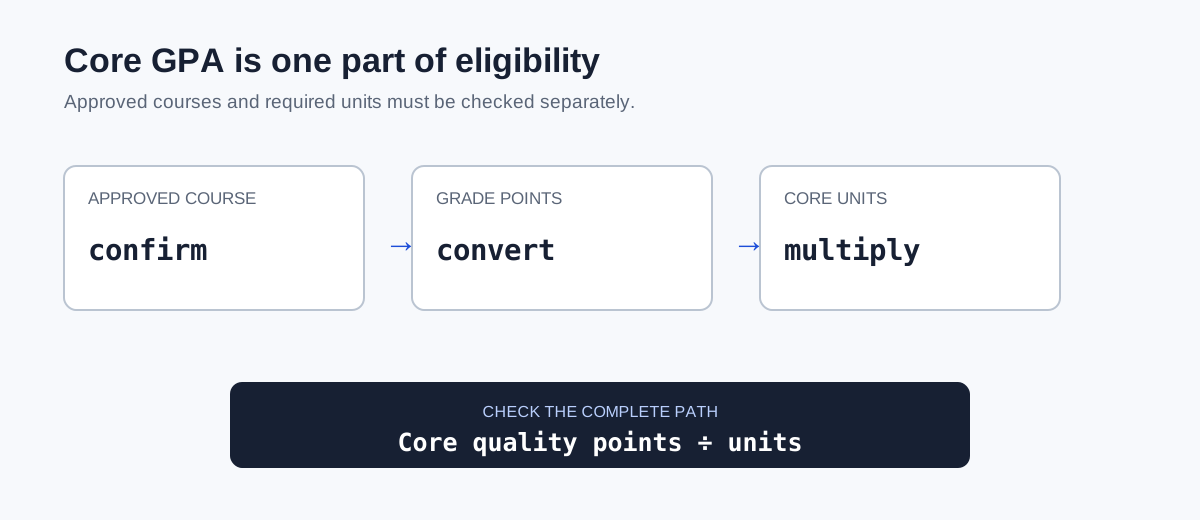
Planning formula
Small example
| Approved core course | Grade points | Units | Quality points |
|---|---|---|---|
| English 11 | 3.0 | 1 | 3.0 |
| Algebra II | 2.0 | 1 | 2.0 |
| Chemistry | 3.0 | 1 | 3.0 |
| US History | 4.0 | 1 | 4.0 |
Why is transcript GPA not enough for NCAA eligibility?
A school may add AP or Honors weight, include non-core electives, or use plus and minus points that do not match the eligibility calculation. NCAA materials also explain that repeated approved core courses may use the highest grade under applicable rules.
Track more than the average
A core GPA can meet the numeric threshold while the course distribution or completion timeline remains incomplete. Keep a worksheet with the approved course title, subject area, unit value, final grade, and school attended. Compare the totals with the current division worksheet rather than relying on GPA alone.
When planning a repeat, confirm that the course is approved and fits the student's eligibility timeline before assuming the higher grade will solve the issue.
Use the Eligibility Center result
GradeHorizon cannot certify athletic eligibility. Work with the high school counselor and the college athletics compliance office, and make sure official transcripts are submitted through the required process.
Reconcile the approved-course list before calculating
Build the worksheet from the student's school-specific approved core-course list, not from the course title alone. Record the subject area, unit value, final grade, and the academic year completed. A course that sounds academic can still fall outside the approved list or satisfy a different core area than expected.
After converting grades under the current division worksheet, total both core units and quality points. Review the subject-area distribution and completion timeline separately from the GPA. A numeric average cannot reveal a missing English unit, an unapproved repeat, or a course completed outside the required period. Recheck the current Eligibility Center record whenever the schedule or final grade changes.
Eligibility is more than one decimal
Use the official certification and current requirements for decisions; this worksheet is only a planning check.
Update the worksheet when the schedule changes
Replace planned grades with final grades at the end of each term and reconcile the units again. If a student drops, repeats, or changes a core course, verify the replacement against the current school list before assuming the GPA effect. Keep planned courses visually separate from completed courses so an unfinished unit is not counted as earned.
Use the resulting estimate to identify questions for the school counselor and Eligibility Center. It should not be presented as an eligibility certification or as a substitute for the official academic record review.
A four-pass check for this method
A reliable ncaa core gpa estimate should leave an audit trail, not just a final number. Work through these four passes in order and keep the source for every scale, weight, credit value, and inclusion decision beside the calculation.
- Start with the student’s school-specific approved core-course list.
- Record the subject area, unit value, final grade, and completion year.
- Apply the current division worksheet to included courses only.
- Review units, subject distribution, and timing separately from the GPA.
After the four passes, change one input at a time and calculate again. The direction and size of the change should match the rule you documented. Preserve unrounded values until the final display, label hypothetical inputs, and keep institutional results separate from estimates created for planning. If the worksheet still disagrees with an official record, compare the included courses and denominator before assuming the arithmetic is wrong.
Reconcile approved core units by subject area as well as in total. A correct GPA can coexist with a missing unit or course-distribution requirement. Save the source date with the worksheet so a later policy change does not silently alter the meaning of the estimate.
Sources
- NCAA: Initial Eligibility Requirements
- NCAA: Division I Requirements
- NCAA: Resources for High Schools
The high school GPA calculator can check ordinary transcript arithmetic, but it cannot determine NCAA core-course eligibility or replace an Eligibility Center calculation.